
2026-09-15 ·
How Local Drainage Issues Influence Mosquito Problems
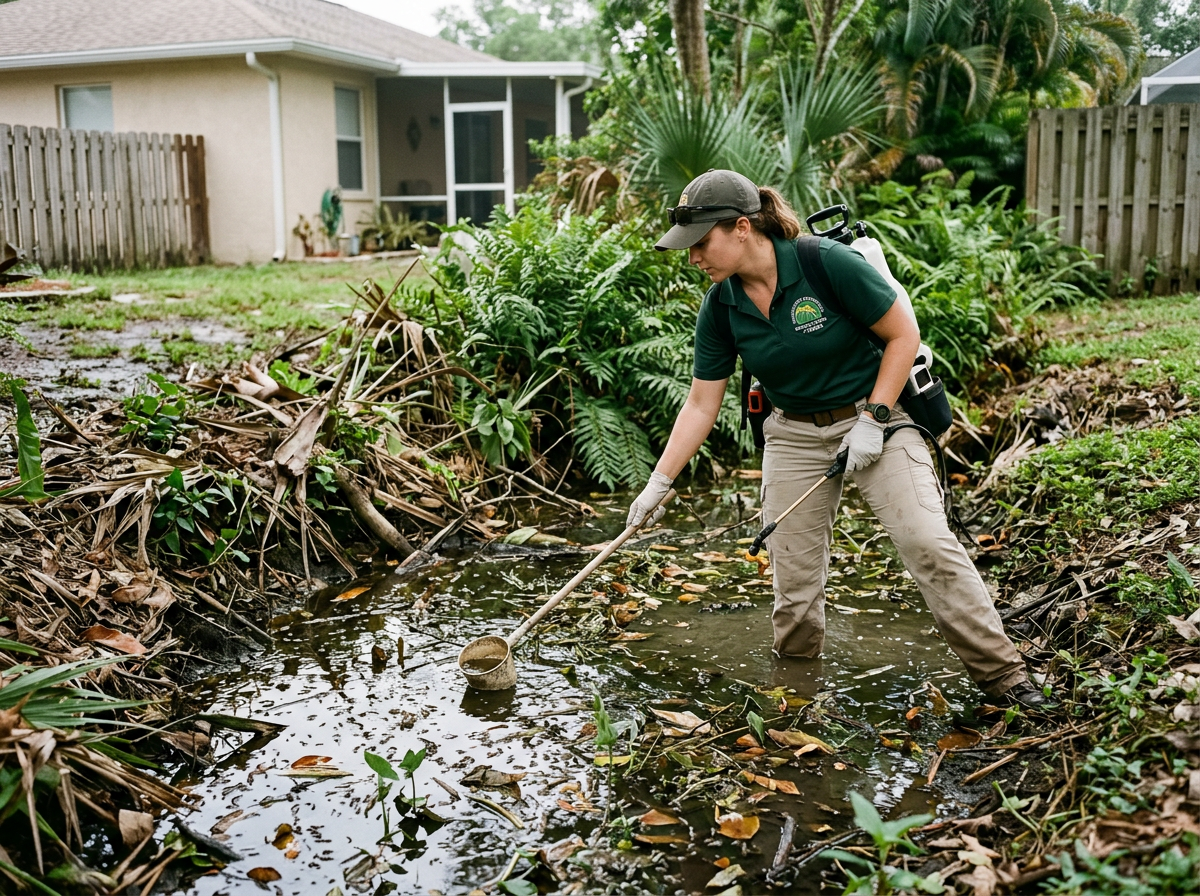
Drainage failures create pockets of standing water that let container-breeding mosquitoes complete their cycle from egg to adult in 7-10 days while salt-marsh species travel several miles inland from coastal marshes. In Brooksville and surrounding areas, afternoon storms refill low spots daily, resetting the clock on new generations. Homeowners notice the difference most where gutters, tarps, and low lawn areas hold water longer than surrounding ground.
How Drainage Shapes Container Breeding Sites
Container mosquitoes lay eggs in any water-holding object that collects rain. Plant saucers, bromeliads, and boat covers left after storms become reliable hatcheries because they retain just enough water for larvae to develop. When yards lack proper slope or French drains, these small depressions stay wet for days instead of hours. The result is repeated cycles that keep local populations elevated even without nearby marshes. Checking and emptying these spots weekly interrupts the 7-10 day timeline before adults emerge.
Salt-Marsh Mosquitoes and Inland Drainage Patterns
Salt-marsh mosquitoes fly miles inland from tidal areas and seek out any additional standing water created by poor drainage. In places like Brooksville, low spots near retention ponds or roadside ditches add to the problem by giving incoming females extra places to lay eggs. Unlike container species that stay close to their hatch site, these mosquitoes can arrive from several miles away and still find suitable breeding spots on properties with blocked or absent gutters. Improving overall site drainage reduces the number of local options they encounter after traveling inland.
Role of Barrier Treatments When Drainage Is Addressed
Barrier treatments target resting vegetation where adult mosquitoes hide during the day. When drainage issues are corrected first, fewer new adults are produced, so the same treatment interval of 2-3 weeks covers a larger portion of the population. Properties with persistent low spots often see quicker rebound because new mosquitoes emerge between applications. Pairing drainage fixes with yard and perimeter treatment keeps shaded resting areas less attractive over longer periods.
No-See-Ums and Fine Screening Needs
No-see-ums pass through standard window screens and breed in the same damp organic matter that poor drainage leaves behind. Properties near wetlands or with frequent standing water see higher numbers because larvae develop in saturated soil rather than open pools. Installing 20-mesh or finer screening and sealing gaps around doors reduces entry while drainage improvements dry out nearby breeding soil. This combination addresses both the source and the barrier without relying on misting systems alone.
Connecting Drainage Work to Ongoing Mosquito Control
Routine inspection of gutters, tarps, and low lawn areas prevents the daily refill from storms from turning into breeding sites. Homeowners in Brooksville who combine these checks with standing water and breeding site reduction see steadier results than those who only treat adults. Related reading on how tree canopies influence mosquito resting spots and checking bird feeders and fountains for hidden breeding shows additional small-scale steps that support drainage improvements.