
2026-09-15 ·
Maintaining Drainage Ditches on Larger Brooksville Lots
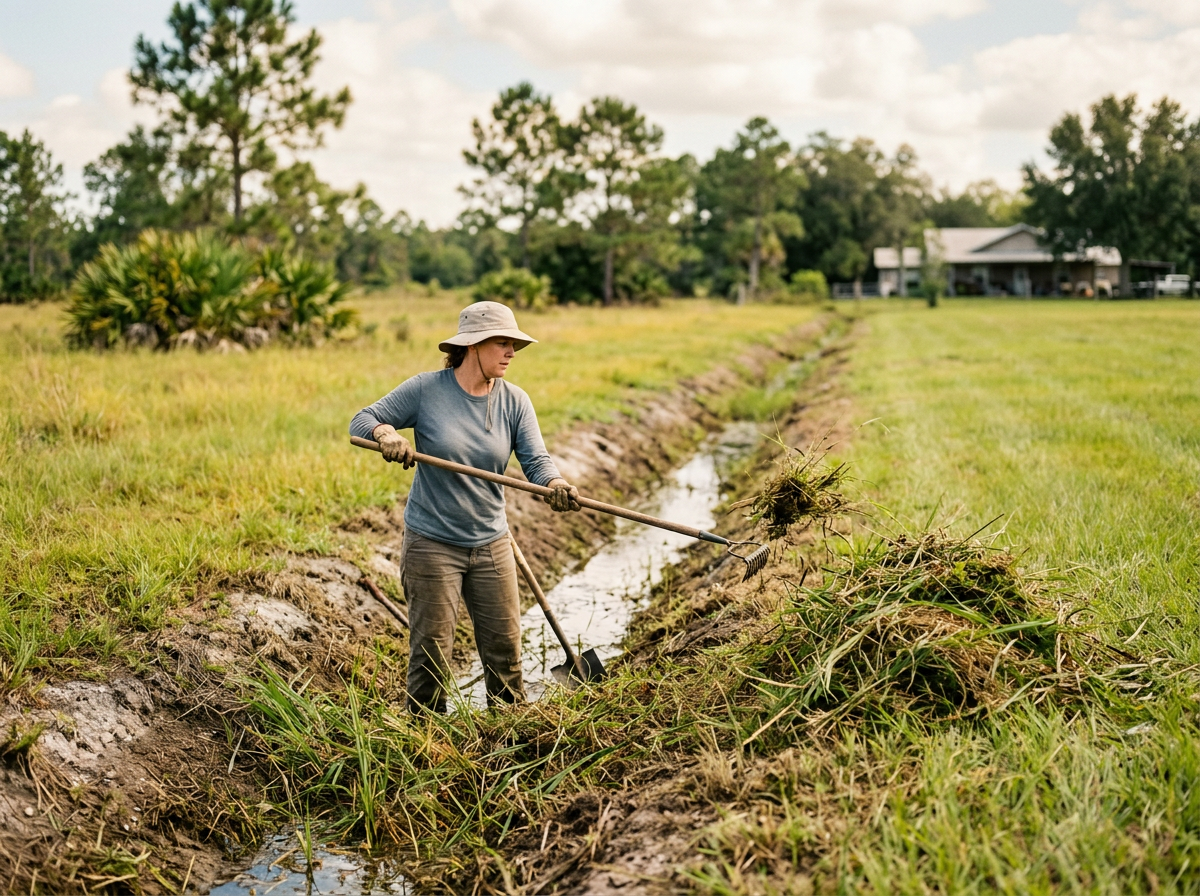
Maintaining drainage ditches on larger Brooksville lots requires clearing debris and vegetation at least every 4-6 weeks so water continues to flow rather than pool after afternoon storms. In Florida's climate, even brief daily rains can leave water in low spots long enough for eggs to hatch. Container-breeding species develop in bromeliads, gutters, and plant saucers while salt-marsh mosquitoes travel several miles inland from coastal marshes. Keeping ditches clear reduces both types of breeding sites without relying on any single method.
Why Drainage Ditches Matter on Larger Lots
Larger properties in Brooksville often include natural swales or man-made ditches that channel runoff from pastures, wooded edges, and driveways. When these channels hold water for more than a few days, they become reliable breeding locations. A single female mosquito can lay hundreds of eggs in a small area, and larvae reach adulthood in 7-10 days under warm conditions. Salt-marsh species may fly 5-10 miles from the coast, while container species stay closer to their emergence point. Consistent ditch flow interrupts this cycle by moving water before it stagnates. Property owners who inspect ditches after storms notice fewer adults resting in shaded vegetation along fence lines and tree borders.
Common Issues That Create Standing Water
Debris such as leaves, branches, and sediment builds up quickly in Brooksville's humid environment. Afternoon storms drop enough rain to reset water levels daily, but blocked sections prevent drainage. Overgrown grass and weeds along ditch banks trap additional moisture and create resting sites. Low spots that never fully dry can hold as little as a half-inch of water, enough for development. On larger lots these problems often go unnoticed until adult activity increases near outdoor living areas. Checking for slow-moving sections after heavy rain reveals where flow is restricted before larvae appear.
Practical Maintenance Steps
Walk the full length of each ditch after every major rain event and remove accumulated debris by hand or with a rake. Cut back vegetation on the banks to at least 12 inches from the waterline to improve sunlight and airflow. Grade any eroded sections so water moves steadily toward the outlet rather than pooling. On lots with multiple ditches, prioritize those nearest the home and any areas used for recreation. Avoid creating new low spots during clearing work. These steps complement standing water reduction efforts by addressing the larger channels that smaller containers cannot replace. Standing Water and Breeding Site Reduction provides additional guidance for properties where ditches connect to other potential sites.
Connecting Ditch Work to Year-Round Mosquito Patterns
Brooksville experiences no winter die-off, so breeding continues whenever temperatures allow. Salt-marsh mosquitoes arriving from the coast add pressure beyond what container species produce locally. Ditch maintenance reduces available water for both groups and limits the need for more frequent barrier treatments along property edges. Homeowners who combine ditch clearing with targeted yard work see steadier results across seasons. Related reading on oak-lined yards in Brooksville shows how tree cover interacts with drainage patterns. Reducing Mosquitoes Around Oak-Lined Yards in Brooksville offers further detail on shaded resting areas that often border ditches.
When to Review Ditch Conditions After Storms
Hurricane recovery periods increase debris loads and can shift ditch banks, creating new pooling spots within days. Checking ditches within 48 hours after high winds or heavy rain prevents larvae from completing development. Properties near Hernando County waterways benefit from extra attention during these windows because standing water persists longer in saturated soils. Mosquito Risks During Hurricane Recovery in Hernando County outlines additional timing considerations for local lots. Regular seasonal reviews every 4-6 weeks between storm events keep flow consistent without requiring emergency work.