
2026-09-15 ·
Mosquito Patterns Around Weeki Wachee Area Homes
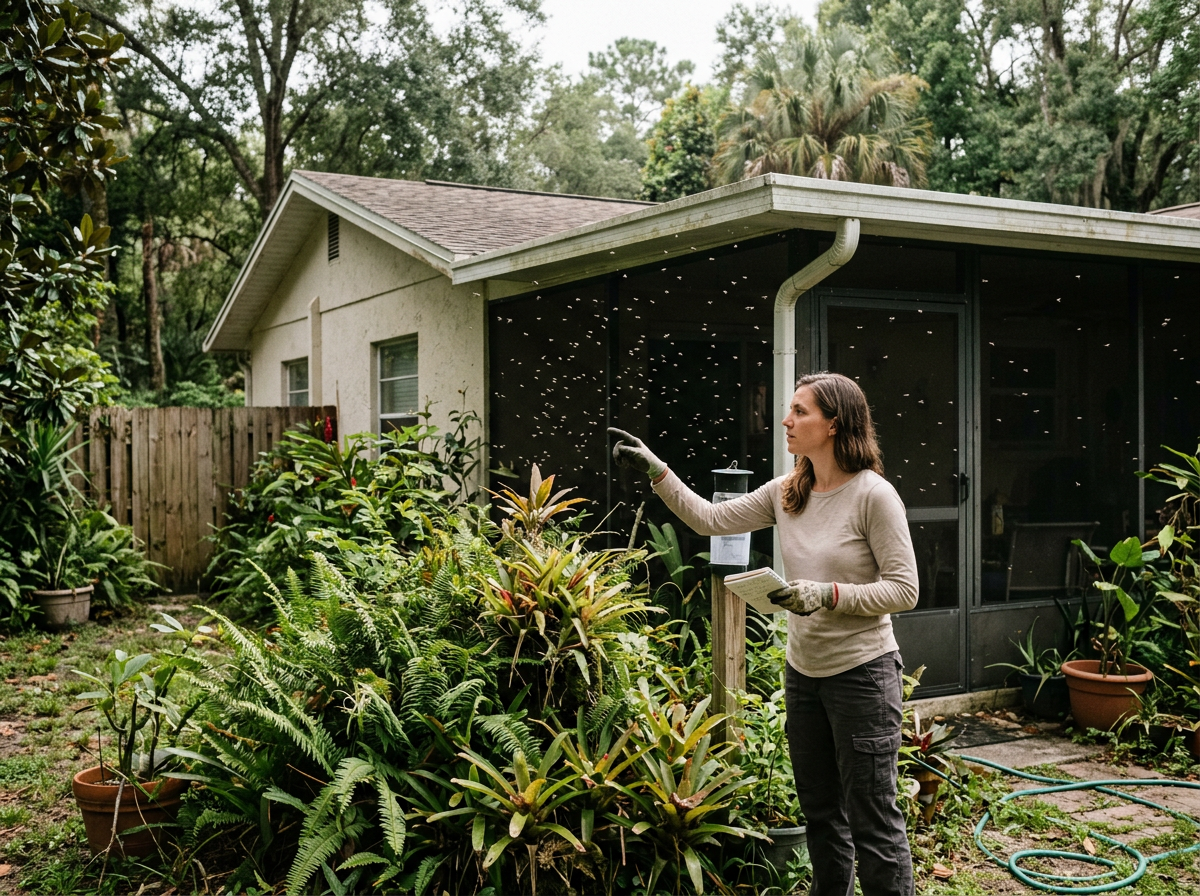
Mosquito patterns around Weeki Wachee area homes feature container species that develop from egg to adult in 7-10 days alongside salt-marsh mosquitoes that fly several miles inland from coastal marshes. These two groups respond differently to the area's standing water sources and vegetation, creating overlapping but distinct pressure points on residential properties. Afternoon storms add fresh water daily, while bromeliads, gutters, and boat covers hold enough liquid for eggs to hatch without large pools.
Container Breeding in Local Yards
Weeki Wachee properties often contain multiple small water holders that support rapid mosquito development. Plant saucers, bird baths, and tarps collect enough water for eggs laid by container species, which need only minimal moisture to complete their cycle. Bromeliads common in landscaping trap water in leaf axils where larvae thrive even after brief rains. Homeowners who empty these items weekly reduce new adults emerging from their own yards. Gutters clogged with debris and uncovered boat covers create additional sites that refill with each storm. Regular checks after rain events keep these sources from contributing to the local population.
Salt-Marsh Mosquito Flights Inland
Salt-marsh mosquitoes reach Weeki Wachee yards after traveling several miles from coastal breeding areas. Unlike container species that stay close to their emergence point, these mosquitoes cover greater distances and appear in larger numbers during certain wind patterns. They rest in shaded vegetation during the day before becoming active at dusk. Properties with dense shrubs or wooded edges near the home provide the resting cover these mosquitoes seek. Barrier treatments applied to those shaded areas can interrupt their movement toward living spaces without addressing the distant marsh source.
Daily Storm Effects on Standing Water
Afternoon storms reset standing water across Weeki Wachee neighborhoods almost every day during the wet season. Each shower adds fresh liquid to containers and low spots, allowing eggs to hatch that would otherwise remain dormant. Tarps and pool covers left in place collect this water repeatedly, extending the breeding window. Homeowners who inspect and dump water within 48 hours after storms limit the number of sites that reach the pupal stage. This pattern continues without a winter pause, so the same routine applies across all months.
No-See-Um Behavior Near Screens
No-see-ums pass through standard window screens and bite near Weeki Wachee homes, especially at dawn and dusk. Their smaller size requires mesh finer than typical insect screening to create an effective barrier. These midges often breed in the same moist soil and leaf litter that holds water after storms. Yards with persistent damp areas near foundations see higher activity levels. No-see-um and biting midge control focuses on both the vegetation they rest in and the soil moisture that supports their development.
Practical Steps for Weeki Wachee Homeowners
Reducing on-site breeding starts with locating and emptying small water containers every few days. Standing water and breeding site reduction helps address the sources that refill after storms. Shaded resting spots around the perimeter benefit from targeted trimming or treatment to limit daytime harborages for incoming mosquitoes. Mosquito control programs in the area often combine these steps with vegetation barriers. Seasonal shifts appear in related patterns documented for nearby Brooksville, where similar conditions produce consistent pressure from both local and coastal species. Spotting new sites after summer storms remains an ongoing task for properties in Hernando County.