
2026-09-15 ·
Understanding No-See-Um and Mosquito Overlap in Summer
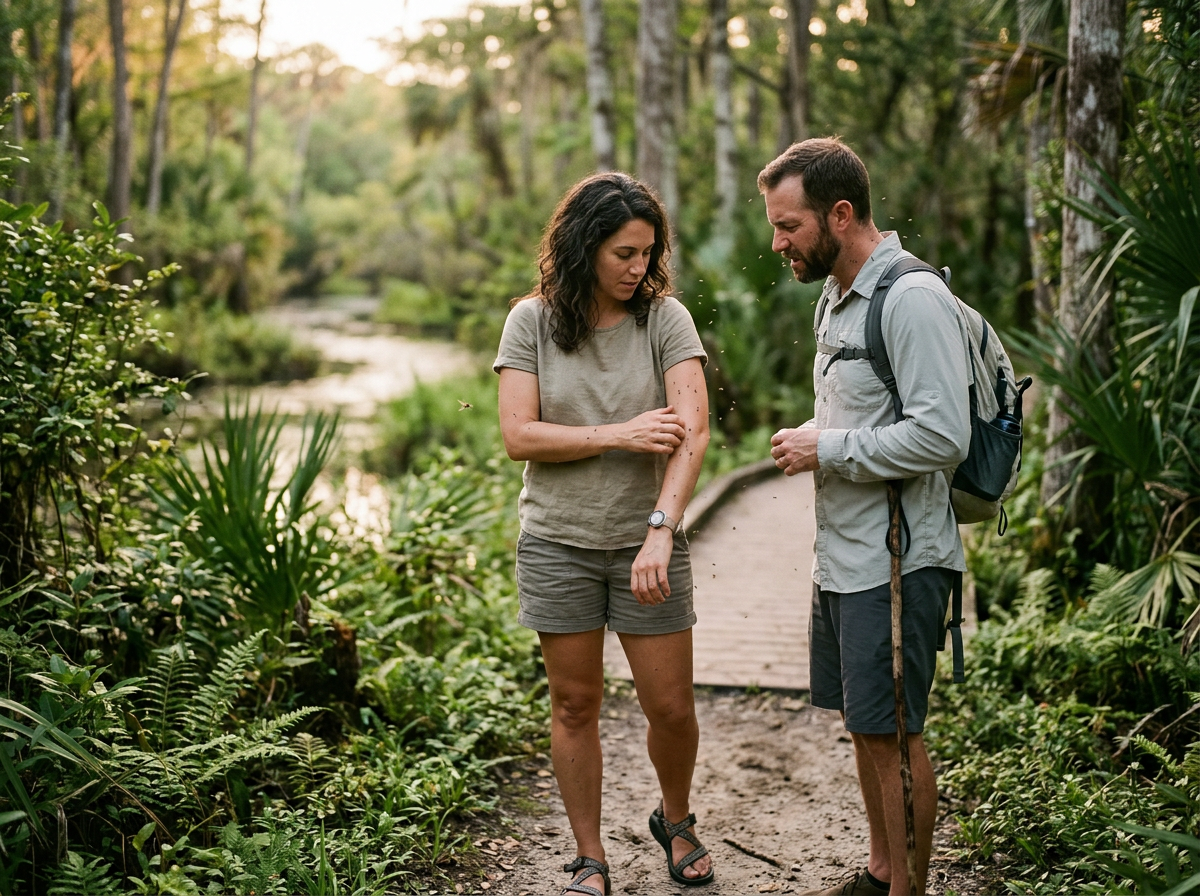
No-see-ums and mosquitoes overlap in summer because both species complete their life cycles in the same small water sources and stay active through Florida's year-round season. Container-breeding mosquitoes reach adulthood in 7–10 days while salt-marsh mosquitoes travel 20–40 miles inland from coastal marshes. No-see-ums require even less water and pass through standard window screens, creating combined pressure on homes in Brooksville and surrounding areas.
Shared Breeding Sites After Storms
Summer afternoon storms refill containers daily and create fresh habitat for both pests. Mosquitoes lay eggs in bromeliads, bird baths, plant saucers, gutters, tarps, and boat covers. No-see-ums use the same sites plus damp soil and leaf litter around foundations. As little as one-half inch of standing water supports egg development for either insect. After heavy rain, larvae appear within 24 hours and adults emerge in under two weeks when temperatures stay above 80 degrees. Homeowners who empty or treat these containers every few days reduce the overlap at the source. Spotting Mosquito Breeding Sites After Summer Storms explains how to locate these spots quickly after each storm passes.
Flight Ranges and Daily Activity Patterns
Salt-marsh mosquitoes fly 20–40 miles from breeding marshes and arrive in Brooksville yards on steady winds. Container species stay within a few hundred yards of their emergence site. No-see-ums remain closer to moist ground but enter yards at dusk when humidity rises. Both groups rest in shaded vegetation during the heat of the day and become active again in late afternoon. Barrier treatments applied to lower tree limbs and shrubbery interrupt this resting behavior for 2–3 weeks before reapplication is needed. The overlap means a single shaded area can harbor multiple species at once, extending biting periods from late morning into evening.
Screening Limitations and Mesh Requirements
Standard 16-mesh window screens stop most mosquitoes but allow no-see-ums through because the insects measure only 1–3 millimeters. Twenty-mesh or finer screening blocks both groups when properly installed and sealed. Porch enclosures often fail at the bottom edges or around doors where gaps exceed 1/16 inch. Replacing or adding a second layer of finer mesh on existing frames reduces entry without replacing entire structures. Residents also notice no-see-ums entering through dryer vents and soffit gaps that mosquitoes rarely use. Checking these openings each spring prevents the overlap from moving indoors during peak summer months.
Practical Yard Maintenance Steps
Removing or treating standing water every 3–4 days breaks the shared breeding cycle. Focus on gutters, plant saucers, and tarps that refill after each storm. Trimming lower branches improves airflow and reduces resting sites for both insects. Standing Water and Breeding Site Reduction outlines targeted removal methods suited to Florida landscapes. Preparing Your Brooksville Home for Peak Mosquito Months adds seasonal timing for these tasks. Consistent attention to these details limits the combined nuisance without relying on a single control method.