
2026-09-15 ·
Inspecting Gutters and Downspouts for Mosquito Larvae
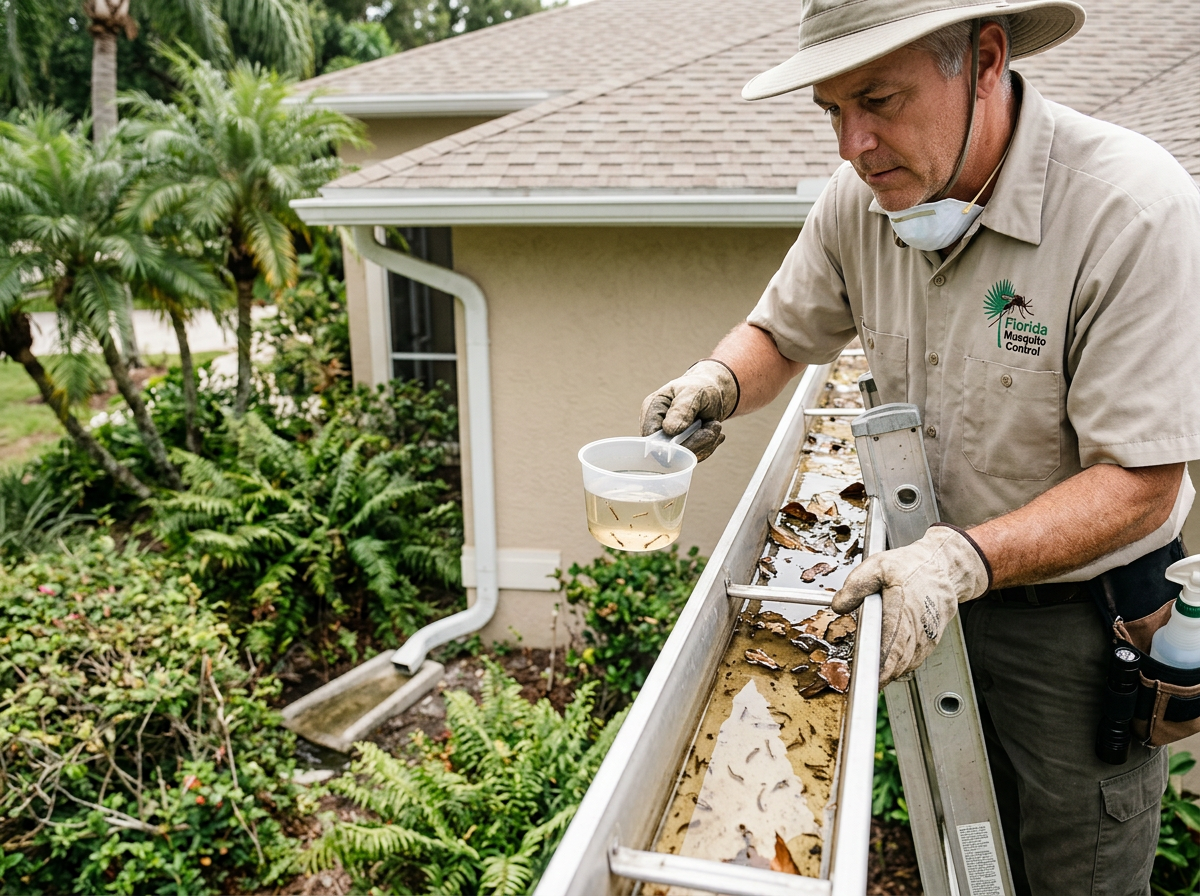
Mosquito larvae can appear in gutters and downspouts within 7-10 days after eggs are laid in as little as one-half inch of standing water. In Florida, where breeding occurs year-round, these roof drainage areas collect debris and hold water after afternoon storms, creating consistent sites for container species that stay within a few hundred feet of emergence.
Why Gutters Collect Larvae in Brooksville Conditions
Florida's daily rains refill gutters faster than they drain when leaves, pine needles, and roof grit clog the channels. Container-breeding mosquitoes deposit eggs on the damp inner surfaces; once water pools, the eggs hatch and larvae filter-feed on organic matter trapped inside. Salt-marsh species rarely reach these elevated spots, but local Aedes and Culex mosquitoes complete development here without traveling the 20-plus miles typical of coastal marsh populations. Homeowners in Brooksville notice the problem most after summer storms when downspout extensions trap water against foundation plantings. Checking these areas every two weeks during peak months prevents larvae from reaching the pupal stage and emerging as adults.
Tools and Timing for Effective Inspections
A sturdy ladder, flashlight, and garden hose allow safe viewing inside the gutter run. Schedule checks the morning after rainfall when water levels are highest and larvae are easiest to spot as wriggling forms against the dark interior. Lift a section of gutter guard if present, or use a telescoping mirror to examine the full length without climbing the entire roof edge. Flush the line with the hose to see whether water exits freely at the downspout or backs up and creates new pools. In Brooksville's humid climate, repeat the process every 10-14 days because eggs can hatch and reach adulthood in that window when temperatures stay above 75 degrees.
Signs of Larvae and Breeding Activity
Look for small, comma-shaped larvae hanging just below the water surface or darting when disturbed. Dark, coffee-colored water with floating debris often signals organic buildup that supports larval growth. Check the downspout base and any splash blocks for additional standing water; even a saucer-sized puddle here can hold hundreds of larvae. If adult mosquitoes rise from the area when you approach, the gutter likely contains pupae ready to emerge. These observations help prioritize which sections need cleaning before the next rain cycle resets the water level.
Connecting Gutter Checks to Broader Site Reduction
Once gutters are cleared, examine nearby plant saucers, tarps, and boat covers that also trap small volumes of water. Standing water and breeding site reduction efforts gain effectiveness when roof drainage is included in the same routine. Homeowners who combine gutter flushing with removal of other containers notice fewer adults resting in shaded vegetation around the yard. This integrated approach addresses the full range of sites that produce mosquitoes within a single property rather than treating symptoms after emergence.
How Local Drainage Patterns Affect Gutter Performance
Brooksville's sandy soils and occasional heavy downpours can overwhelm gutters that slope incorrectly or lack proper extensions. When water overflows instead of flowing through downspouts, it creates wet soil pockets that attract additional egg-laying. How Local Drainage Issues Influence Mosquito Problems explains how these patterns interact with roof features. Adjusting downspout angles or adding longer extensions directs flow away from the house and reduces the chance of new standing water forming near the foundation.
Maintaining Results After Initial Cleaning
After removing debris, install gutter guards sized for Florida's leaf load to slow future clogging. Re-inspect the system after the next three rain events to confirm water moves freely and no new larvae appear. Pair these checks with perimeter vegetation management so any adults that do emerge have fewer shaded resting spots. Consistent attention to gutters limits the number of new mosquitoes added to the local population each week without relying on repeated chemical applications alone.