
2026-09-15 ·
Seasonal Mosquito Shifts Between Spring and Fall in Brooksville
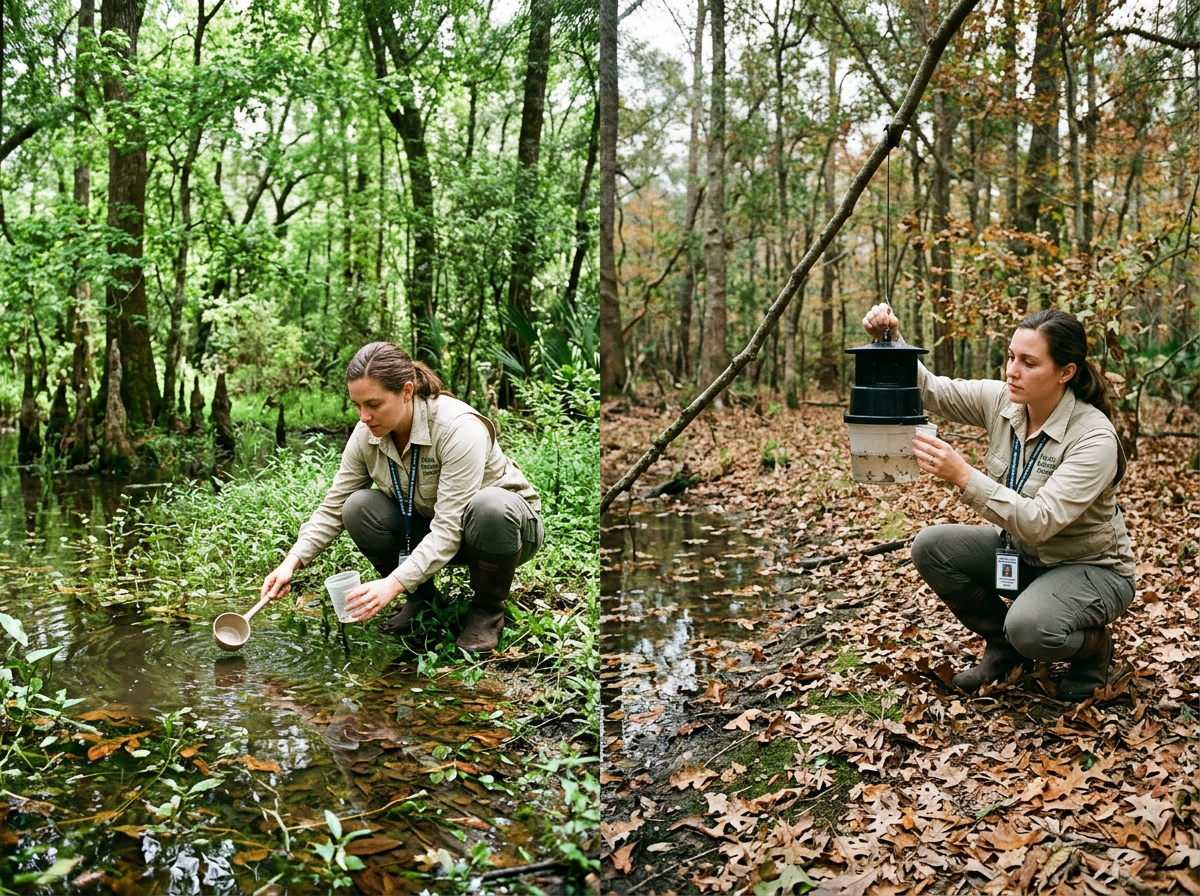
Mosquito populations in Brooksville transition from moderate spring levels to peak summer numbers before tapering in fall, with container breeders completing cycles in 7-10 days and salt-marsh species traveling 5-10 miles inland from coastal marshes.
Spring Emergence Patterns
In early spring, Brooksville sees the first consistent hatches from overwintered eggs in bromeliads and plant saucers after afternoon storms refill small containers. These container species require only a bottle-cap amount of standing water to develop, allowing rapid population growth when daytime temperatures reach the low 80s. Salt-marsh mosquitoes begin moving inland during this period but remain secondary to local breeders. Homeowners notice increased activity around shaded vegetation where adults rest during the day. Barrier treatments applied every 2-3 weeks can interrupt resting sites before numbers build further. Standing water reduction around gutters and tarps limits new egg-laying opportunities as the season progresses.
Summer Peak and Storm Influence
By June, daily afternoon thunderstorms reset breeding sites across Brooksville yards, creating fresh water in tarps, boat covers, and bird baths that container mosquitoes exploit within hours. The 7-10 day egg-to-adult cycle repeats multiple times each month, sustaining high densities through September. Salt-marsh mosquitoes increase their inland flights during this window, reaching properties several miles from the coast after strong weather systems. No-see-ums also become more noticeable, passing through standard 18x16 window screens and requiring 20x20 mesh or finer for effective exclusion. Barrier treatments shift to 3-4 week intervals once vegetation growth stabilizes. Drainage features that hold water for more than a few days contribute heavily to sustained activity.
Fall Decline and Overwintering
As daytime highs drop below 85 degrees in October, Brooksville experiences slower larval development and fewer new hatches from container sites. Salt-marsh flights decrease with cooler coastal winds, though isolated adults may still reach inland areas. Many eggs remain viable in dry plant saucers and gutters, ready to hatch with the next rain. Homeowners who reduce standing water in fall see lower spring emergence the following year. Barrier applications every 4 weeks help maintain lower resting populations through the transition. Local drainage patterns continue to influence which yards experience lingering activity into November.
Site Reduction Steps That Match Seasonal Changes
Walk the property each month and empty or treat containers that collect water after storms. Focus on bromeliads, saucers, and covers that refill weekly during summer. Check gutters for blockages that create persistent pools. For properties near marshes, note wind patterns that carry salt-marsh mosquitoes farther inland after heavy rains. These steps align with natural shifts rather than attempting to eliminate all activity.
Residents tracking these patterns can time standing water and breeding site reduction efforts to the months when container species dominate. Properties in Brooksville also benefit from reviewing how local drainage issues influence mosquito problems to address chronic sites before fall eggs overwinter.